
Plant protection records: what belongs in every entry now
Leaf wall area, BBCH stage, EPPO code: the set of required details has outgrown the notepad in the tractor. What exactly is required, how to capture it while you work — and why the announced electronic obligation need not be a shock.
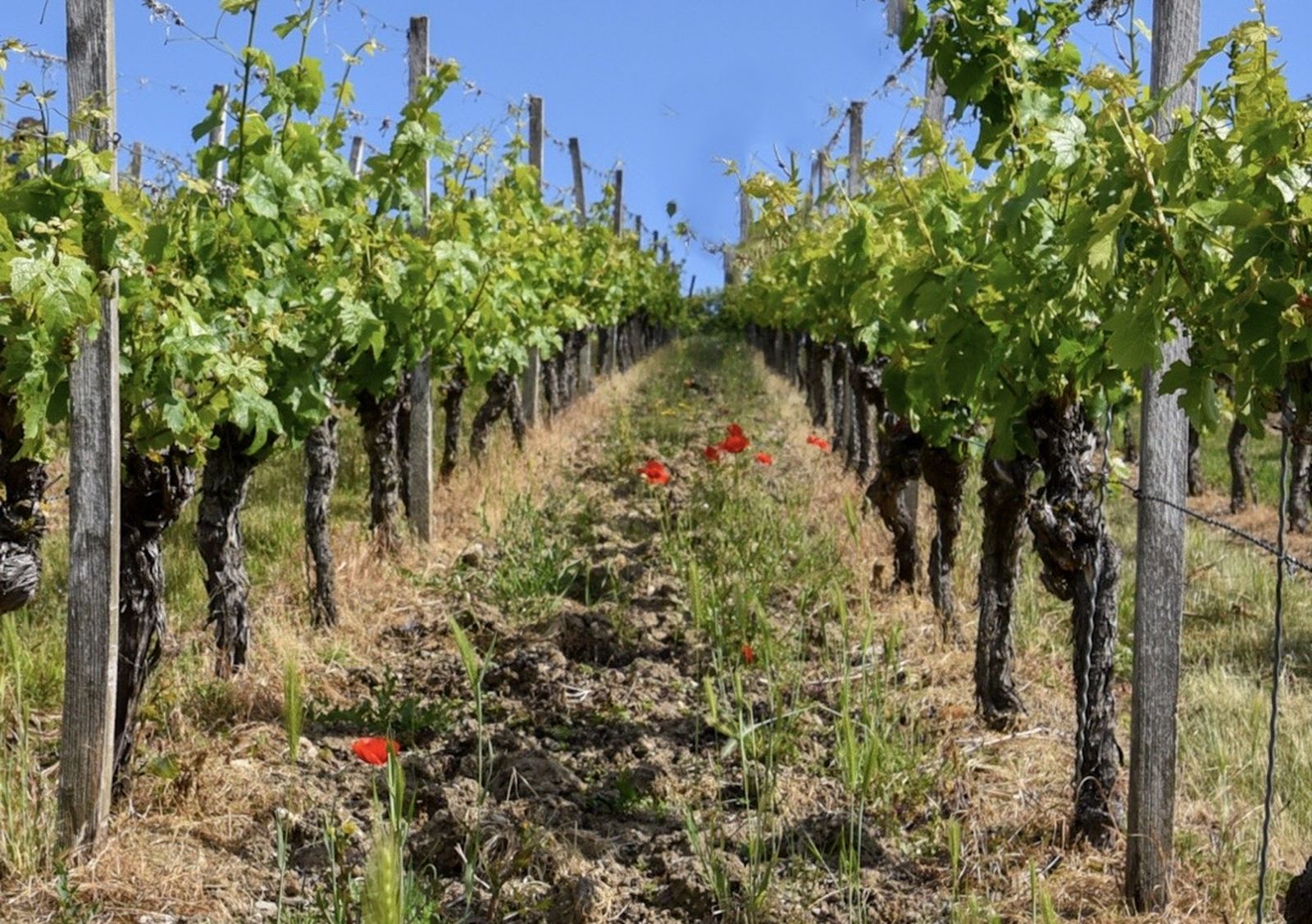
The obligation to keep records of plant protection products is neither a German invention nor anything new: Article 67 of EU Regulation 1107/2009 has required it of every professional user for years, and section 11 of the German Plant Protection Act implements it nationally. What is new is something else — the number of details required, and the question of how anyone is supposed to keep them sensibly on paper.
What belongs in every single application
Every application has to be recorded, and no later than 30 days afterwards. The core set:
- The date of application — not the week, the day.
- The treated area, unambiguously identified. In practice: the parcel with its size in hectares.
- The crop — for us the grape variety, often with the block and the training system.
- The product with its official authorisation number. Not the trade name alone: authorisations expire, trade names stay.
- The application rate per hectare and the total quantity that follows from it.
- The reason for the application — which pest, which disease.
On top of that come details required by particular schemes, certifications or buyers, and they finish the notepad off for good: the BBCH growth stage of the vine at the time of application, the EPPO code of the pest, the leaf wall area as the reference quantity instead of plain ground area, wind direction and wind speed, the sprayer used and its nozzle configuration.
Why leaf wall area makes the difference
Anyone calculating by hectares of ground area in viticulture is calculating past reality. A block with 1.80 m row spacing and a 1.30 m leaf wall has a completely different target area from one with 2.20 m and 0.90 m — at identical ground area. That is why application rates are increasingly referenced to the leaf wall area. The arithmetic is no great feat, but it is a figure that has to be recorded properly once per block and then never touched again.
Keep for three years — and find it when it matters
Records have to be kept for three years. That sounds harmless until an inspection turns up and wants to see a particular application on a particular parcel the year before last. A folder full of notes satisfies the retention duty formally — but it does not answer the question in five minutes.
The pre-harvest interval is the real trip hazard
The record is one thing. The pre-harvest interval between the last application and the harvest is another — and it is not in the calendar, it is in the authorisation of the individual product. Anyone treating a parcel in August and intending to pick in September needs to know whether the two fit together. The same goes for the resistance strategy: how often may a mode of action be used in one season, and how often has it been used already?
Both are questions nobody asks while filling in the notepad — only afterwards, when it is too late.
The point at which documenting stops being a chore
The difference lies not in the number of fields but in the moment. If the application is recorded in the vineyard — on the phone, while you are standing there anyway — then parcel, area and date are already known, the product arrives with its authorisation number from the official catalogue, and the application rate follows from the leaf wall area recorded earlier.
The report is then not produced at a desk in the evening; it was already finished before the tractor left the row. And because the system knows the pre-harvest interval of the chosen product, it can warn you before the sprayer is hitched up — not when the harvest is due.
And the electronic obligation?
That records will in the medium term have to be kept and submitted electronically has been announced; the exact date and scope are not yet finally settled. Anyone already recording digitally gains something regardless: the changeover is then not a changeover but a tick in a setting.
That is the actual calculation. Not “digital because we will soon have to”, but: whoever documents while working has the record anyway — and the obligation becomes a side effect.